§ 83
Five Whys
The first answer to "why did this fail" is usually a symptom, and fixing a symptom leaves the cause in place to fail again.
Keep in mind
Keep asking why until you reach something you can change
What to do
In the postmortem, keep asking why of each answer until you reach something the team can change that would have stopped the chain, and give that change an owner. Branch whenever an answer has more than one cause, and never stop at a person: "the engineer made a mistake" is a cue to ask why the mistake was easy to make.
Why it happens
Investigations stop at the first cause that someone could plausibly have prevented, because it closes the ticket and names an action. That cause is usually the one nearest in time (a bad config push, a full disk), and fixing it removes this instance without touching whatever produced it. Asking why again of each answer walks the chain back to a condition (a missing check, a process nobody owns) whose fix prevents a whole class of failures. Five is a rule of thumb, not a required depth.
When it stops applying
Swiss Cheese Model: a single chain of whys picks one path through an accident that had several, the analyst's choice at each step decides which root cause comes out, and in complex systems there is often no single root to find.
Source
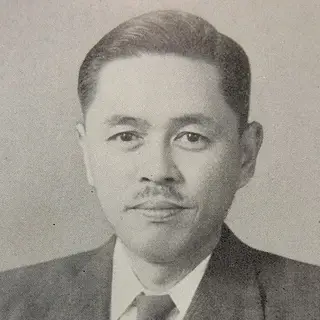
Taiichi Ohno, Toyota Production System: Beyond Large-Scale Production (Productivity Press, 1988; originally 『トヨタ生産方式』, Diamond, 1978), ch. 2 "Evolution of the Toyota Production System", section "Repeating Why Five Times" — the method as the basis of Toyota's approach to problems.
Read the sourceCite this
Read in a column
- Before and after an incident Next in the column: Swiss Cheese Model
Related laws
- 33Swiss Cheese ModelEvery safeguard has holes; accidents happen when the holes in several layers line up.
- 56Normal Accident TheoryIn complex, tightly coupled systems, accidents are built into the structure.
- 74Blameless PostmortemPunishing the person nearest a failure teaches people to hide what they did.
- 82Andon (Stop the Line)Letting anyone who sees an abnormality stop the line keeps a defect from traveling downstream, where it costs more to find and fix.
- 10XY ProblemPeople ask for help with their attempted fix instead of the problem they actually have.
- 98Genchi Genbutsu (Go and See)Decisions made from reports drift away from what is actually happening, because each layer of summary drops the detail that did not fit its form.